
SAB BIOMANUFACTURES
Natron X
The source
Where is Lake Natron located?
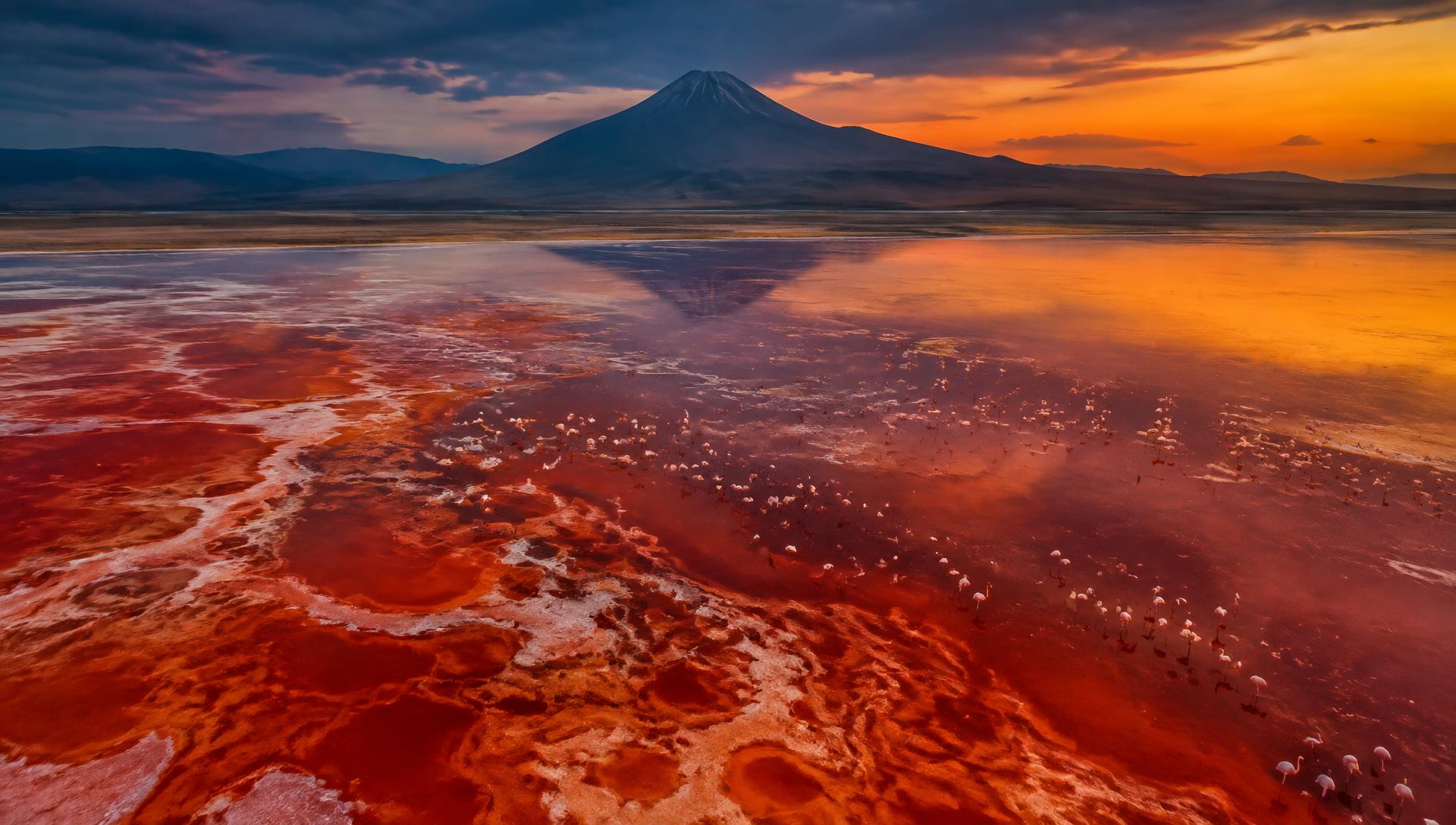
Lake Natron lies in northern Tanzania, in the Arusha Region inside the East African Rift Valley. It sits just below Ol Doinyo Lengai, the world’s only active volcano that erupts natrocarbonatite lava, a cool, silvery lava rich in sodium and potassium carbonate minerals.
60°C
Water temperature, a scalding 140°F
pH 10.5
Almost as caustic as household bleach
2M+
Lesser flamingos nesting here each year
75%
Of the global flamingo population
History & science
The “deadly” lake.
For centuries Lake Natron has been known as one of the most hostile, eerie and extreme environments on the planet. The local Maasai named the nearby volcano Ol Doinyo Lengai meaning “The Mountain of God.”
The lake takes its name from natron, a natural mixture of sodium carbonate decahydrate or soda ash, that washes down from the volcanic hills. The lake has no outlet: water escapes only by evaporating under the scorching African sun, so those minerals have concentrated over thousands of years.
That same corrosive, alkaline water calcifies and preserves the bodies of birds or bats that die in it, giving them a haunting, “turned to stone” appearance.
Nature’s miracle
A safe haven for life.
Despite its deadly reputation, Lake Natron is a thriving cradle of life. It is the most important breeding ground in the world for Lesser Flamingos. Over 2 million birds, 75% of the global population, fly here to build their nests.
The caustic water is itself the defence: a natural barrier that keeps predators like hyenas and lions from reaching the nests. The flamingos survive by eating spirulina, a bright red, salt-loving microalgae that flourishes in the caustic water and gives the lake its famous pink-and-red colours.
Why it matters
The lake that taught us how to capture carbon.
Everything that survives here does so with enzymes tough enough to work in boiling, caustic water. That same toughness is what Natron X puts inside every filter cartridge.